


Many companies struggle with data quality issues. Having high-quality data is crucial for businesses to make informed decisions and stay competitive. However, many companies struggle with poor data quality in numerous aspects of their business. I discussed this topic in a recent video in the Drums and Data Series. Here are the top five data quality challenges that companies commonly face:
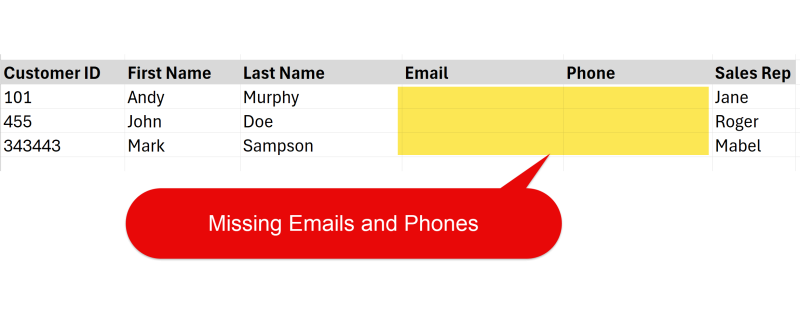
Incomplete Data
Incomplete data occurs when critical information is missing. This could be as simple as missing ZIP codes, email addresses, or other essential data points. For example, if sales territories are assigned based on ZIP codes, missing ZIP codes can lead to mismanagement and inefficiencies.

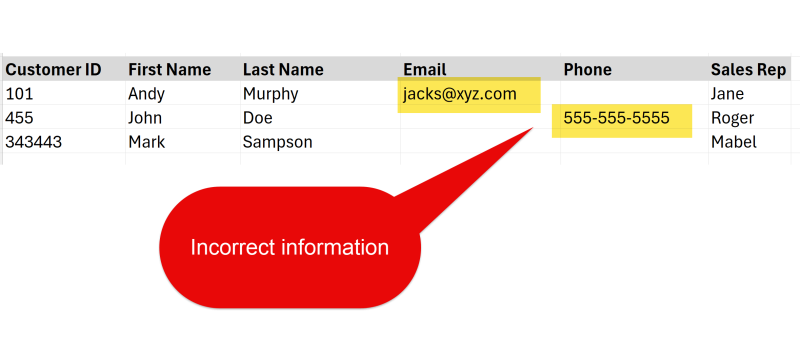
Inaccurate Data
Inaccurate data refers to information that is incorrect. This could include wrong phone numbers, incorrect addresses, or any other erroneous data. Inaccurate data can lead to poor decision-making and can negatively impact customer relationships.
Inconsistent Data
Inconsistent data arises when there are discrepancies across different systems or within the same system. For instance, an individual’s email address might be different in two separate systems, or addresses might be formatted inconsistently (e.g., “Street” vs. “St.”). Such inconsistencies can cause confusion and hinder data integration efforts.

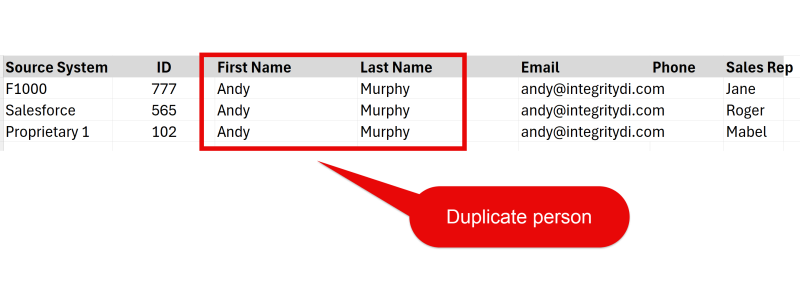
Data Duplication
Data duplication occurs when the same data is recorded multiple times. This could mean having multiple entries for the same person or entity. For example, there might be five entries for “Andy Murphy” in a database, leading to redundancy and inefficiencies.
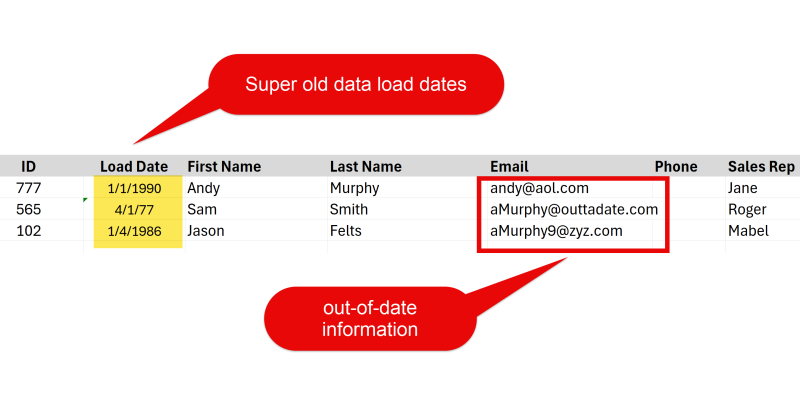
Stale Data
Stale data refers to information that was once accurate but is now outdated. This could be due to changes over time, such as a person moving to a new address or changing their phone number. Stale data can lead to incorrect insights and decisions.
How Do You Fix Data Quality Issues ?
Fixing data quality issues can be a challenge. The best course of action is to first conduct a full and detailed data quality assessment on your data. We have some tips on how to do this in another blog. This will ensure you know which of these 5 issues you are facing and the volume of the issues that need to be addressed. Armed with data you have on your data quality issues, you are ready to create a strategy to address the issues. We also have tips on how best to do that. The best strategy is one that involves a balance of technology and people.
Need Help With Your Data Quality Issues?
Integrity Data Insights can help you assess your data quality challenges and come up with a plan to resolve them. Schedule a consultation today to get started